 ML Designs
Summary
Finding what you can’t see.
Reimagining the BLINK experience through an interactive discovery concept designed to connect people with art, local businesses, and the Cincinnati community beyond the festival.
Project type:
UX/UI Design · Digital Experience · Brand Strategy
Role:
Concept Development · UX/UI Design · Visual Design · Marketing Strategy
Context:
Academic client project for ArtsWave
The Challenge
BLINK transforms Cincinnati into an immersive experience through light, art, and creative expression. But what happens when the festival ends?
The challenge was to explore how ArtsWave could extend that excitement beyond the event and encourage people to continue discovering the arts and local community throughout the year.
With a proposed $9.99 monthly subscription, the concept needed to offer a compelling reason for users to return to the app and see value in staying connected beyond the festival’s free experience.
The goal was to create an experience that felt less like another app to check and more like an invitation to explore.
Understanding the Audience
The concept focuses on people who enjoy exploring, discovering something unexpected, and sharing experiences with others.
Rather than asking users to open an app simply to browse events, I wanted to give them a reason to engage with their surroundings. The experience turns the city itself into an opportunity for discovery, making local art and community spaces part of an interactive journey.
This audience direction informed the decision to use location-based discovery, visual clues, and rewards to encourage exploration.
The Concept
Find What You Can’t See transforms the ArtsWave app into an interactive discovery experience inspired by BLINK.
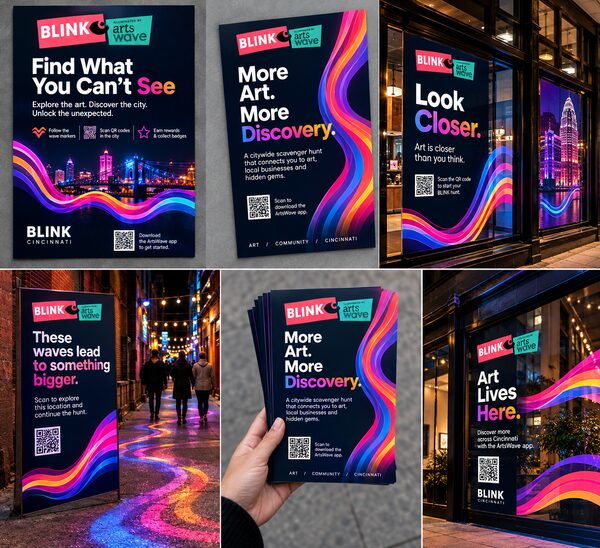
The idea is simple: encourage people to look closer at the city around them. During BLINK, participants follow visual ArtsWave wave markers, discover hidden experiences, and scan QR codes to unlock progress and rewards.
The wave becomes a signal that something is waiting to be discovered. It connects physical locations to a digital experience while building on ArtsWave’s existing visual identity rather than introducing an entirely new brand.
Most importantly, the experience doesn’t end when BLINK does. The concept extends into ongoing discovery challenges that encourage users to explore Cincinnati’s arts and culture throughout the year.
How It Works
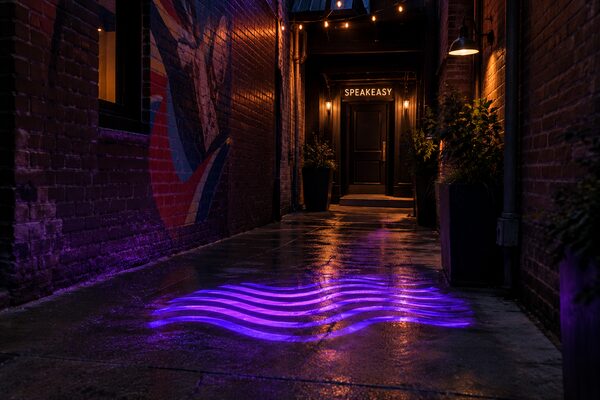
01 — See the Wave
Users encounter an ArtsWave visual marker in the physical environment, whether on the ground, a window, a poster, or a projection.
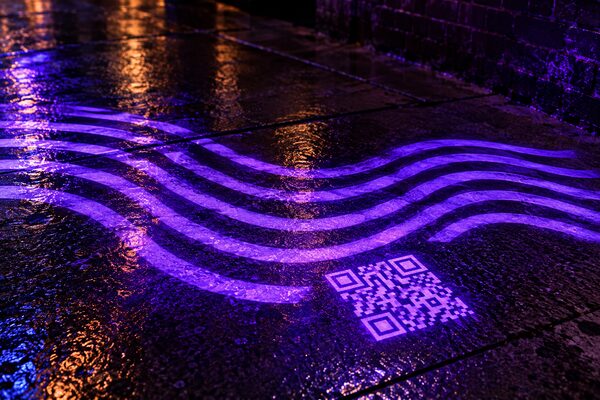
02 — Look Closer
Curiosity leads users to investigate the marker and scan its QR code to begin or continue their hunt.
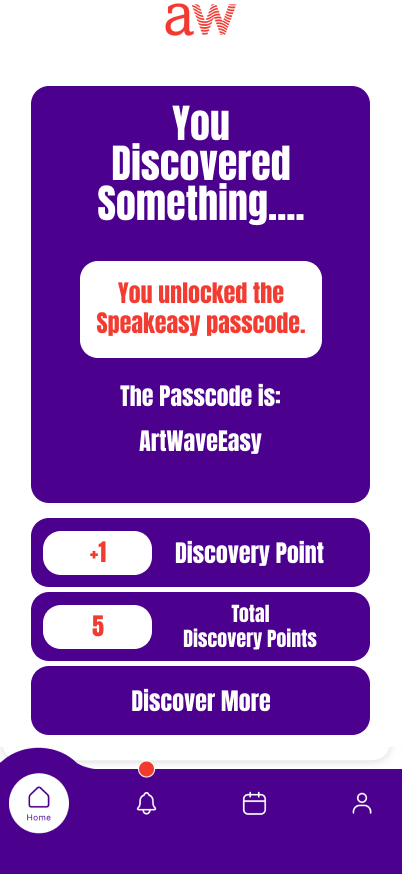
03 — Discover
The app guides users toward another location, installation, or local experience.
04 — Unlock
Users collect progress, earn badges, and potentially unlock rewards tied to participation.
05 — Follow the Next Wave
After the festival, new discovery challenges give users a reason to return and continue exploring their community.
Designing the Digital Experience
The app experience was designed to make discovery feel intuitive, visual, and rewarding. Instead of treating the app as a directory of events, I explored how it could act as a guide between the physical world and digital content.
The interface supports the discovery journey through location-based cues, hunt progress, QR interactions, and collectible achievements. Each interaction gives users a clear next step while reinforcing the excitement of uncovering something new.
The visual direction uses a dark, nighttime-inspired interface with vibrant accents, bold typography, map details, and glowing markers. This approach connects the digital experience to BLINK’s illuminated environments while helping key actions stand out.
Designing an Experience Beyond the Screen
A key part of the concept was connecting the digital experience to the physical environment. The ArtsWave wave acts as a visual clue, appearing in unexpected places throughout BLINK and inviting people to take a closer look.
From projected waves on alley floors to QR codes embedded in physical touchpoints, each interaction creates a bridge between the environment and the app.
This approach allows the experience to feel integrated into the festival rather than separate from it. It also creates opportunities for local businesses, artists, and community spaces to become part of the discovery journey.
The same system could continue beyond BLINK through new locations and rotating challenges, giving ArtsWave opportunities to maintain engagement throughout the year.
Building Long-Term Engagement
The concept explores how gamification and discovery can help create a more lasting relationship between users and ArtsWave.
Progress tracking and collectible badges provide immediate feedback, while hidden locations and rotating challenges give users a reason to continue exploring. Potential rewards and local business partnerships could add another layer of motivation.
The larger strategy is to shift the app’s value from a single festival experience to an ongoing way to discover arts and culture in Cincinnati.
By connecting participation with continued discovery, the concept offers a possible path toward retaining users beyond the initial free month and making the proposed $9.99 monthly subscription feel more valuable.
Pitch Deck
Reflection
This project challenged me to think beyond individual design deliverables and consider how a complete experience connects people, places, and technology.
One of the biggest considerations was finding a way to extend the excitement of BLINK while keeping ArtsWave at the center of the concept. Using the existing wave identity helped create a connection between the physical festival and the digital experience without requiring an entirely new brand.
The project also pushed me to consider the relationship between user engagement and business goals. Rather than designing an app experience in isolation, I explored how discovery, gamification, and community partnerships could work together to encourage continued participation.
Ultimately, this project helped me see design as more than creating something visually appealing. It is about building meaningful interactions that serve both the people using the experience and the organization behind it.